My Second Brain Setup: PARA + an LLM-maintained Wiki
A practical way to combine PARA for source material with an LLM-maintained wiki for durable, reusable understanding.
Most note-taking systems fail at the same point: not capture, but reuse. Saving articles, meeting notes, project documents, and ideas is easy. Turning those fragments into something you can use again is harder.
My setup separates two jobs that are often mixed together: organizing material and maintaining knowledge. For the first, I use PARA. For the second, I use an LLM-maintained wiki.
PARA is the home for material
PARA gives material a stable home according to its current role: Projects for work with an outcome, Areas for ongoing responsibilities, Resources for reference material, and Archives for inactive material. An inbox catches notes that have not earned a permanent place yet.
The strength of PARA is not perfect categorization. It gives new material an obvious destination without demanding a complex taxonomy. But it is not, by itself, a knowledge system. It is a system for keeping source material accessible.
The missing layer: maintained understanding
A folder of notes can contain a lot of information without containing much usable knowledge. The gap appears when you need the current understanding of a topic, need to distinguish duplicates from new ideas, or need to preserve connections between several sources.
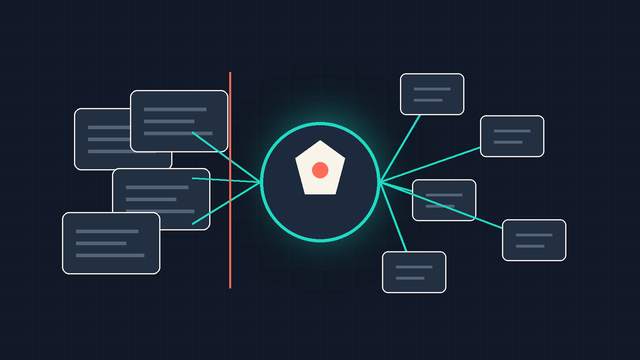
A conventional approach searches notes at query time and asks an LLM to assemble an answer. That is useful, but it repeats the same discovery work whenever the question returns. I instead keep a separate wiki layer: source summaries, concept pages, guides, entities, and longer syntheses. Raw PARA material remains the historical record; the wiki contains the maintained interpretation.
A three-layer second brain
The architecture has three layers: raw material in PARA; a maintained wiki built from selected sources; and a small schema that defines page types, tags, ownership boundaries, and update workflows. The schema matters because an LLM needs operating constraints, not just access to files. It defines what it may change and what must remain untouched.
The workflow in practice
The workflow is simple: capture, organize in PARA, select a useful source, ingest it into the wiki, then reuse it through a query or synthesis. During ingest, the LLM creates or updates a source summary, improves relevant concept pages, adds links, records unresolved contradictions, updates the index, and logs the change.
Later, the model can start from curated pages rather than rediscovering everything from raw files. A substantial answer can itself become a synthesis. The result is a system that improves through use: it does not just store what I have seen; it accumulates the relationships that make the material useful.
Why the separation matters
Keeping PARA and the wiki separate protects both layers. Raw notes can stay messy, personal, and historically accurate. The wiki is expected to be edited: it is the current best model of what the sources mean. It also makes public writing safer, because an article can emerge from a reviewed synthesis rather than directly from private project notes.
Start smaller than you think
You do not need to migrate every note into a wiki. Start with one topic that keeps returning. Give the raw material a stable home, define a small and explicit schema, and let the system earn its complexity by making one topic easier to understand the next time you need it. A second brain is valuable not because it stores everything, but because it helps you reuse what matters.